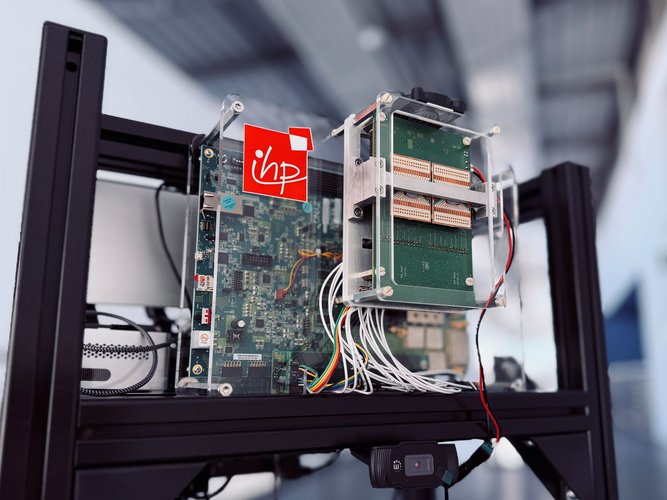


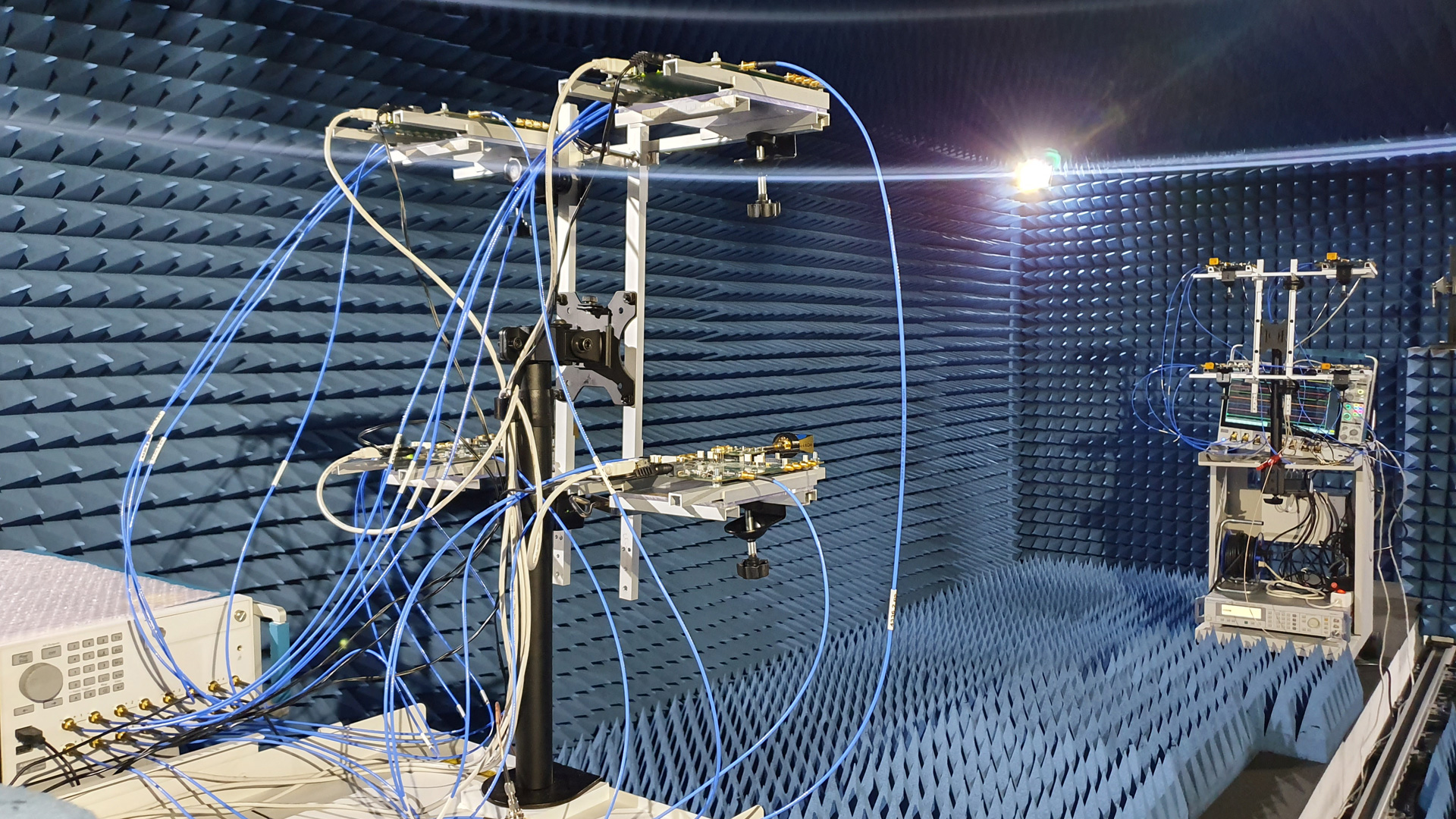
The System Architectures Department conducts research on wireless broadband systems, reliable computing systems, Neuromorphic Hardware, and the intelligent Internet of Things. In addition, it provides system integration and testing services for internal and external customers and contributes to application-oriented projects conducted in close collaboration with industry.
The department aligns its activities with the research objectives of the other IHP departments. By linking technologies and components with applications and the associated system architectures, it supports their integration into complete systems and demonstrators.
The department’s research on broadband communication systems, AI hardware, reliable circuit solutions and IoT is internationally recognized and contributes to research and development projects at the European, national, and regional levels.
Competencies
Wireless Broadband Systems
Research focuses on 6G communication systems and, in particular, integrated sensing and communication. Cooperative time-of-flight methods and non-cooperative radar techniques are embedded in communication systems to enable localization, ranging, and sensing. In addition, wireless links for data rates of 100 Gbit/s and above are being developed. This is achieved through higher spectral efficiency using beamforming, MIMO, and line-of-sight MIMO, as well as through the use of frequency bands above 100 GHz.
Reliable Computing Systems
The department develops reliable computing systems for demanding applications such as artificial intelligence, space applications, and automated driving. Its work includes fault-tolerant computing architectures and multiprocessor systems whose performance, energy consumption, and reliability can be dynamically adjusted. On-chip sensors enable this reconfigurability and support silicon lifetime management.
Research also covers secure data processing, including methods for protecting against side-channel attacks and the development of secure cryptographic computing units. Fault-tolerant, robust, and radiation-hardened design methods are particularly important for space applications, which are among IHP’s strategic research fields.
Neuromorphic Hardware
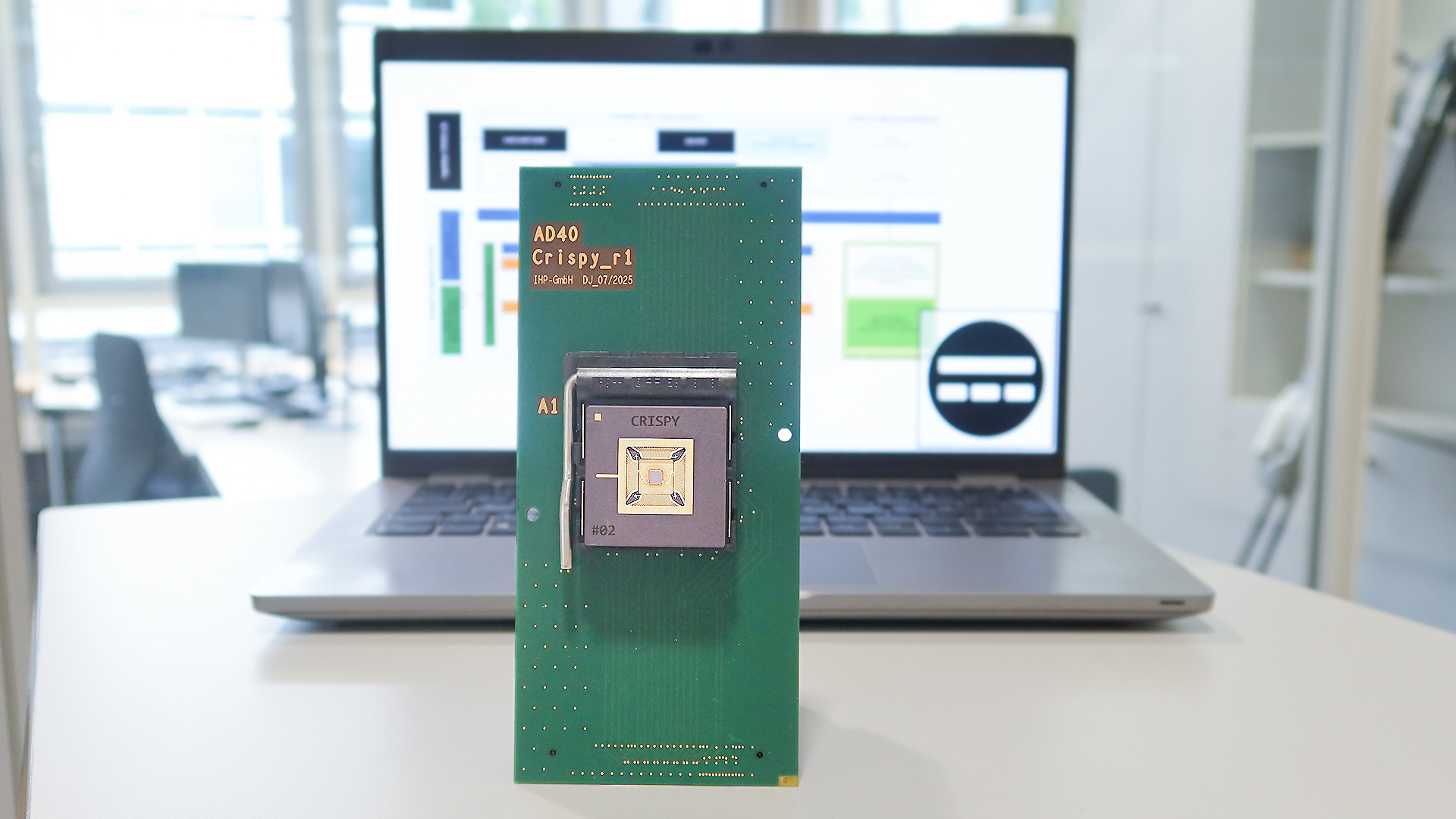
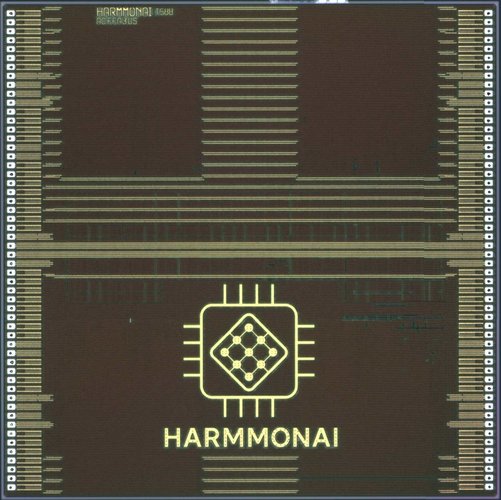
Another focus is research into AI processing based on emerging technologies such as RRAM, new architectures such as in-memory computing, and bio-inspired approaches including spiking neural networks. In addition, the department investigates the interactions between artificial intelligence and reliability by assessing the reliability of AI hardware and using artificial intelligence to accelerate reliability validation.
Intelligent IoT Systems
The team develops architectures, methods, and technologies for cyber-physical systems that continuously monitor their environment, assess their operating state, and adapt autonomously using data-driven feedback loops. A key focus is distributed intelligence from the Edge to the Cloud. This ensures interoperability, reliability, security, and energy efficiency while enabling modular, reusable IoT solutions that can continue to evolve throughout their entire operating lifetime.
Technical Infrastructure and Capabilities
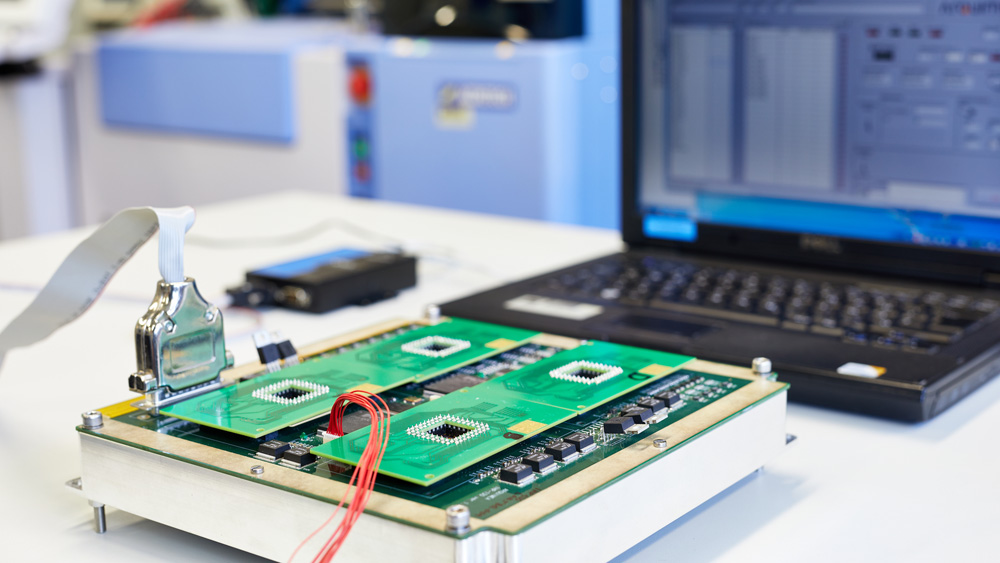
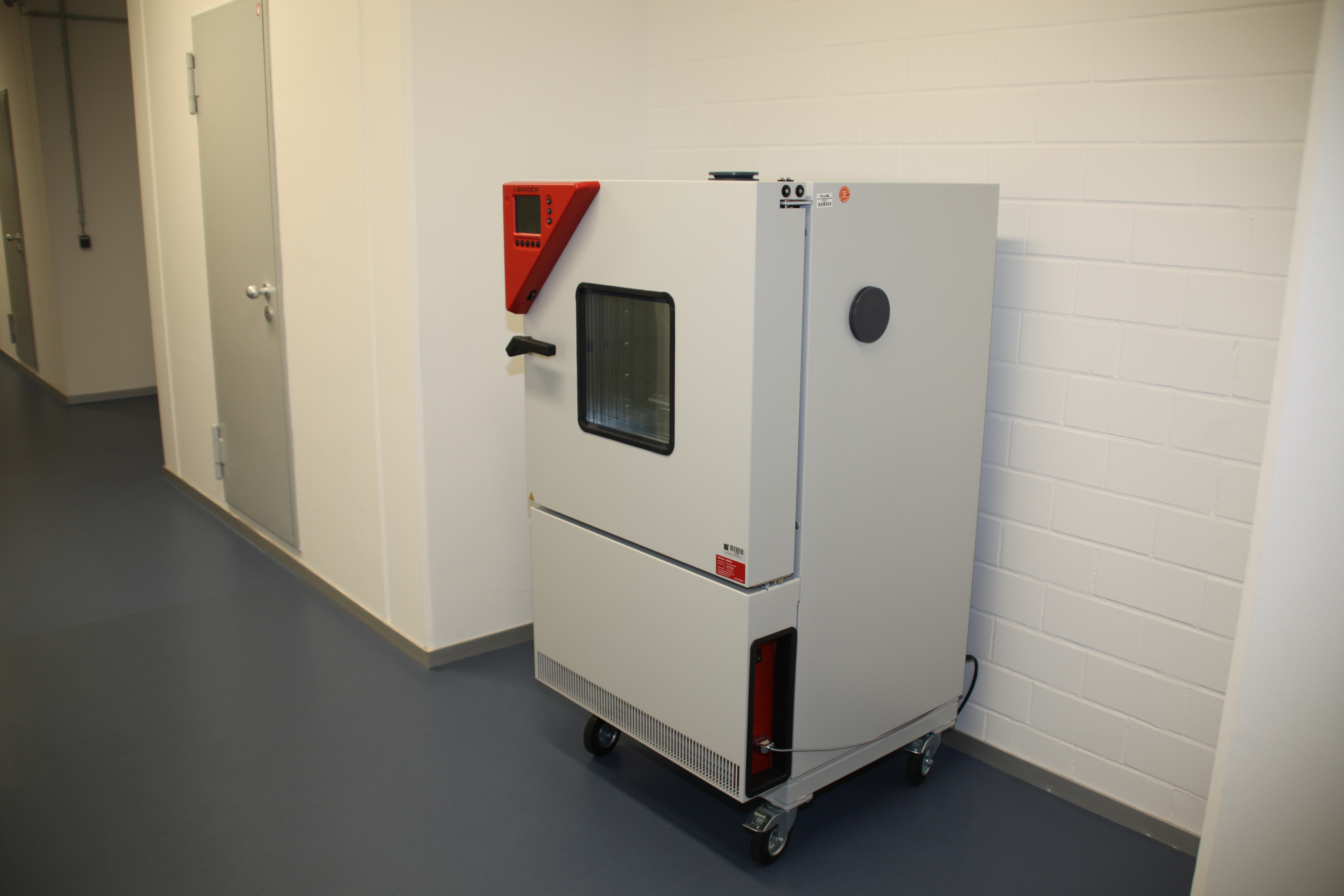
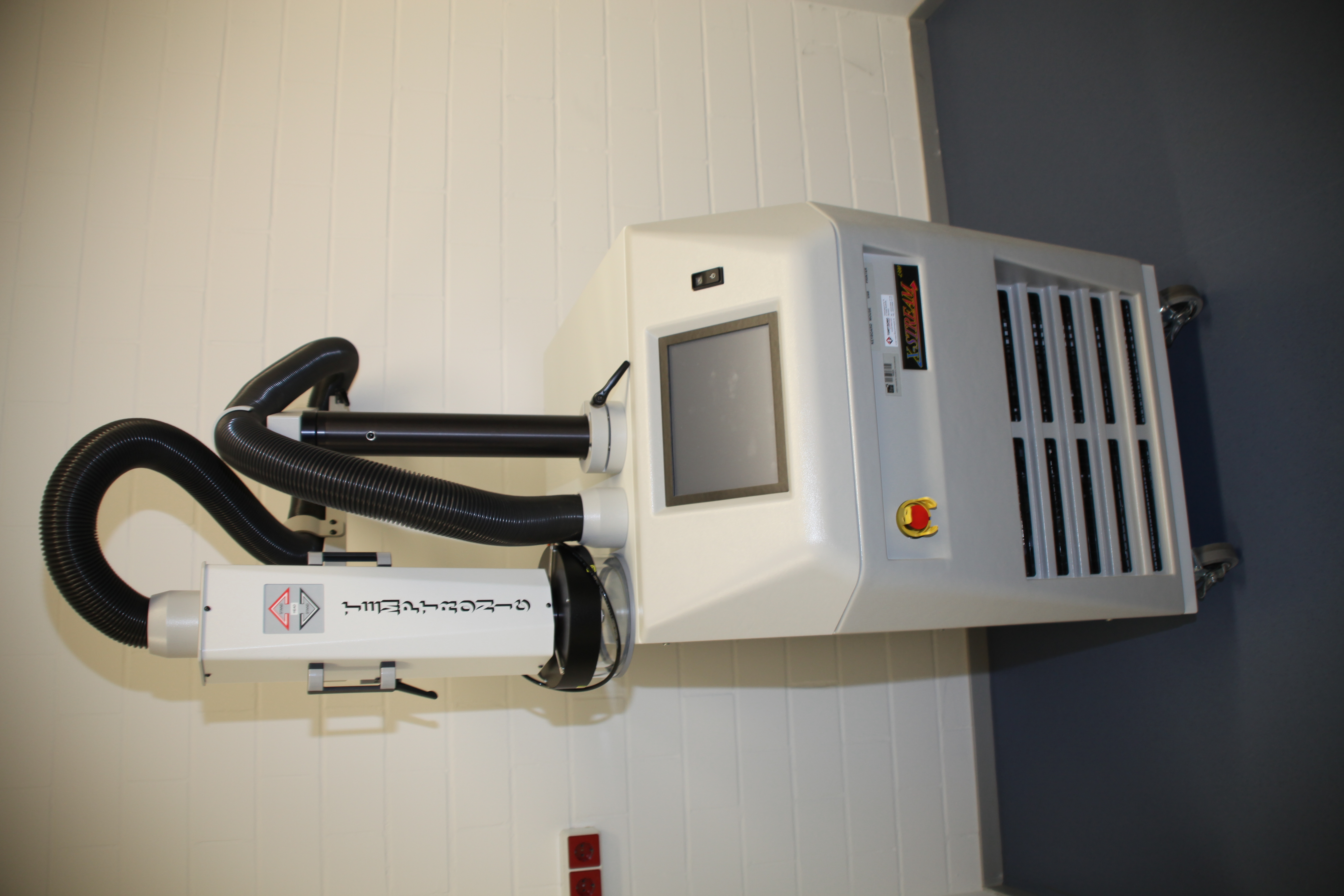
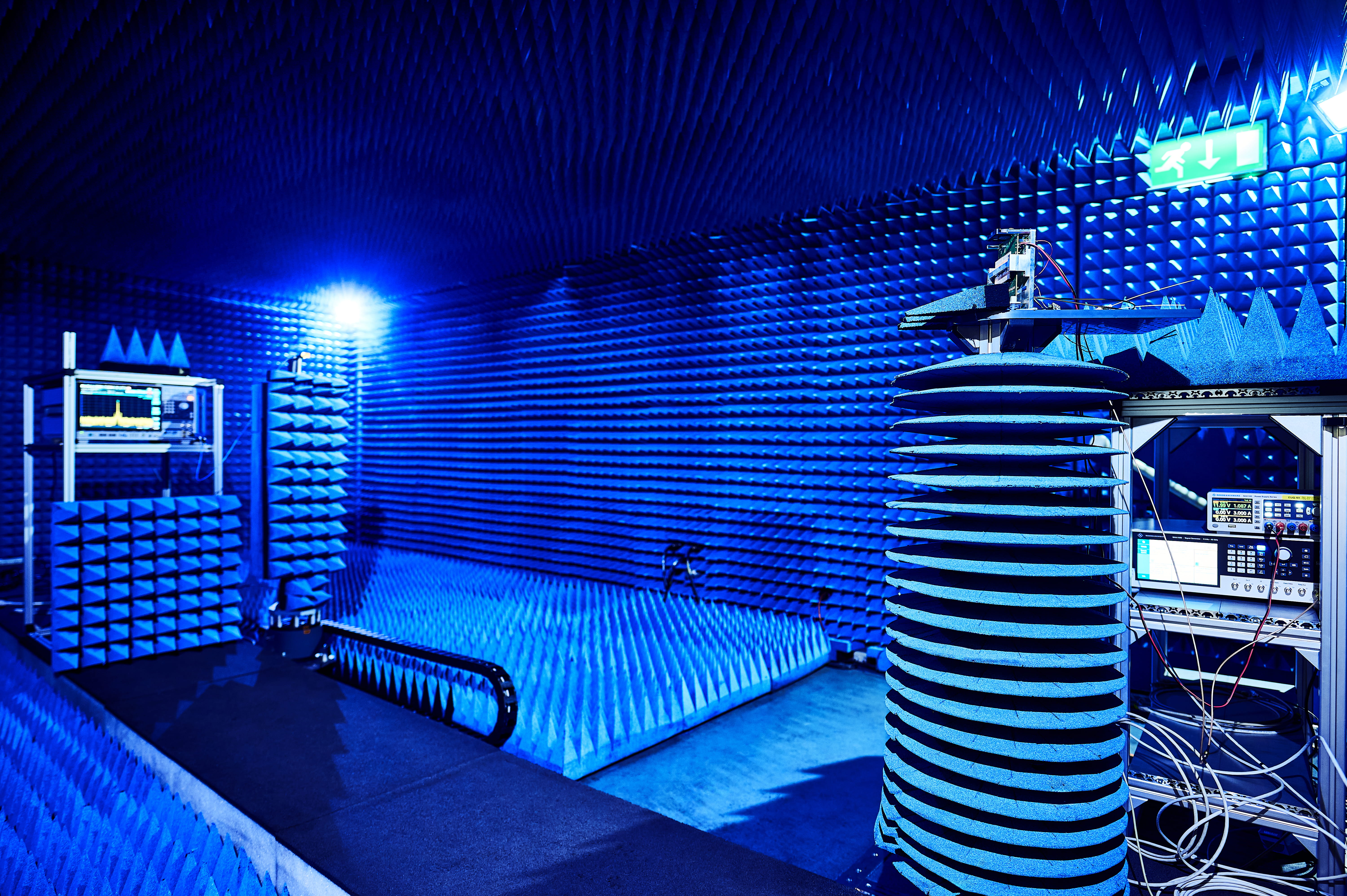
The department operates research infrastructure and laboratories for chip testing, system integration, and antenna measurements. Its technical capabilities include:
- Design of fault-tolerant computing architectures and multiprocessor systems
- Design methods for fault-tolerant, robust, and radiation-hardened systems
- Digital signal processing for localization and ranging using n-way ranging and radar technologies
- Design and modeling of hardware for accelerating AI applications
- High-data-rate wireless communications for 5G and 6G
- Joint Communications & Sensing (JCAS) – joint wireless communication and sensing
- Fronthaul and backhaul networks
- Signal processing for ultra-high-speed communications in the frequency range from 60 to 300 GHz
- ASIC design and testing
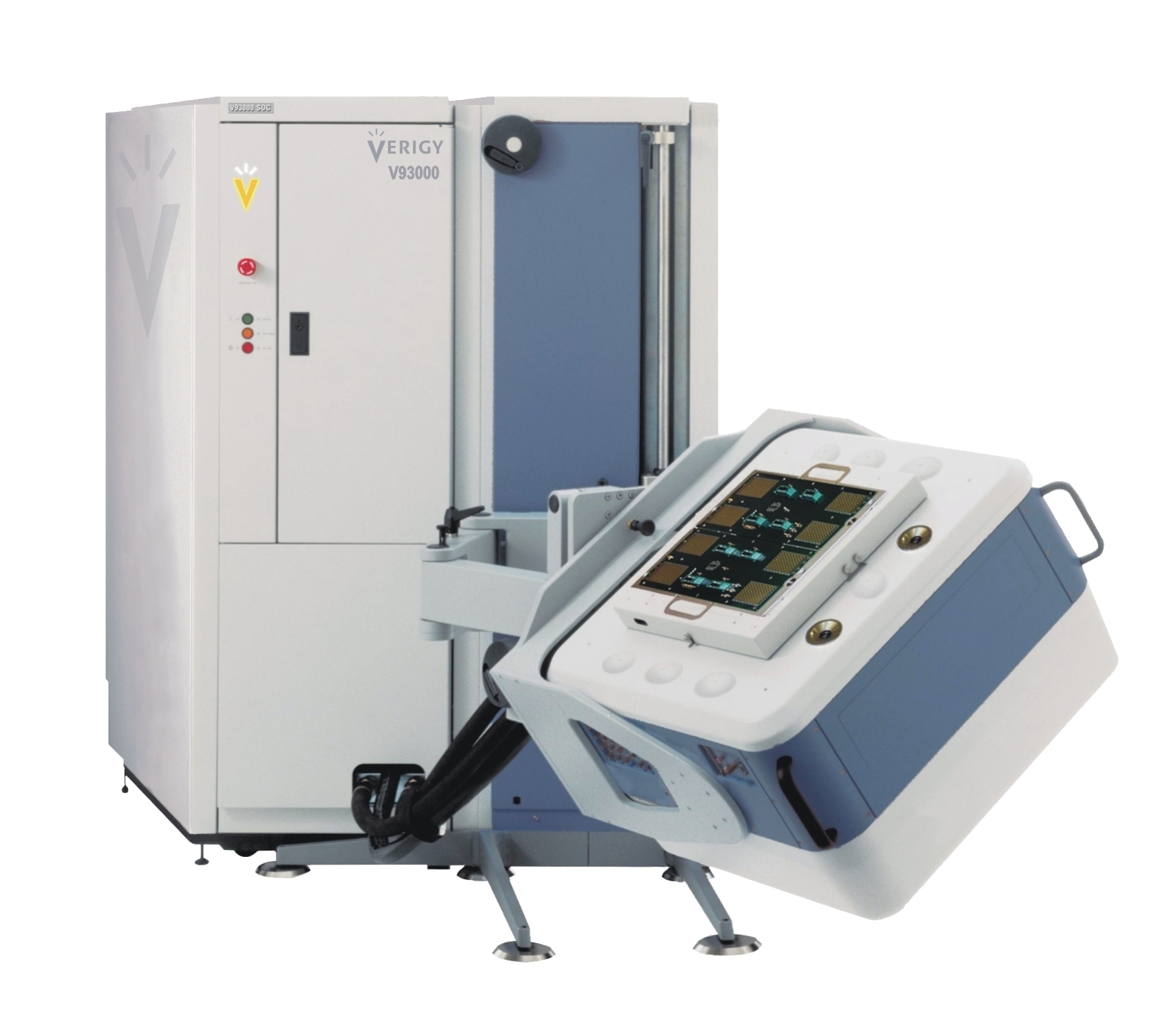
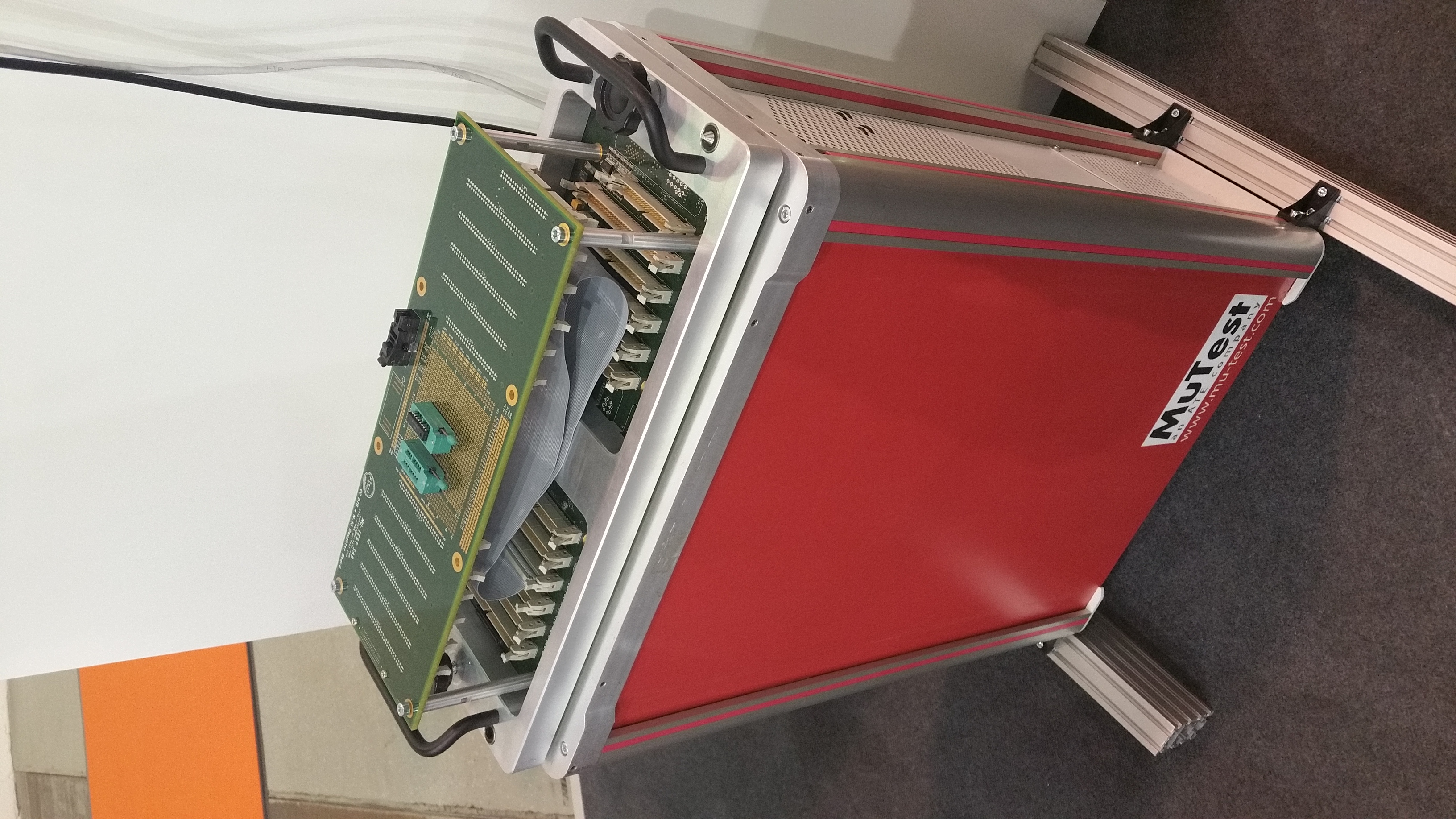
- Testing of digital and Mixed-Signal systems-on-chip
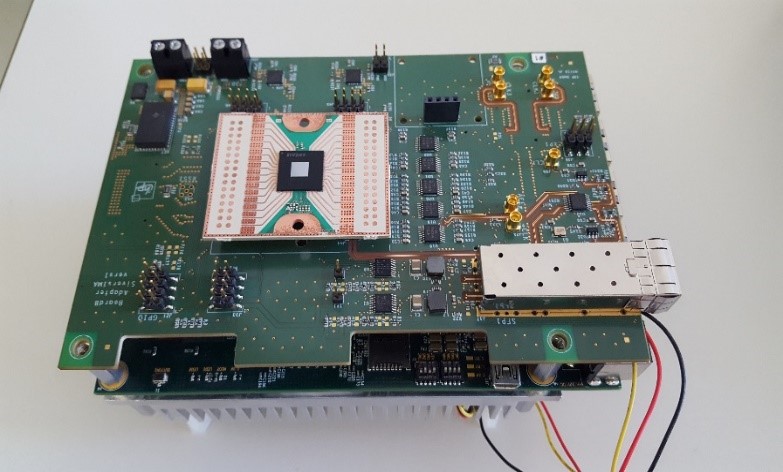
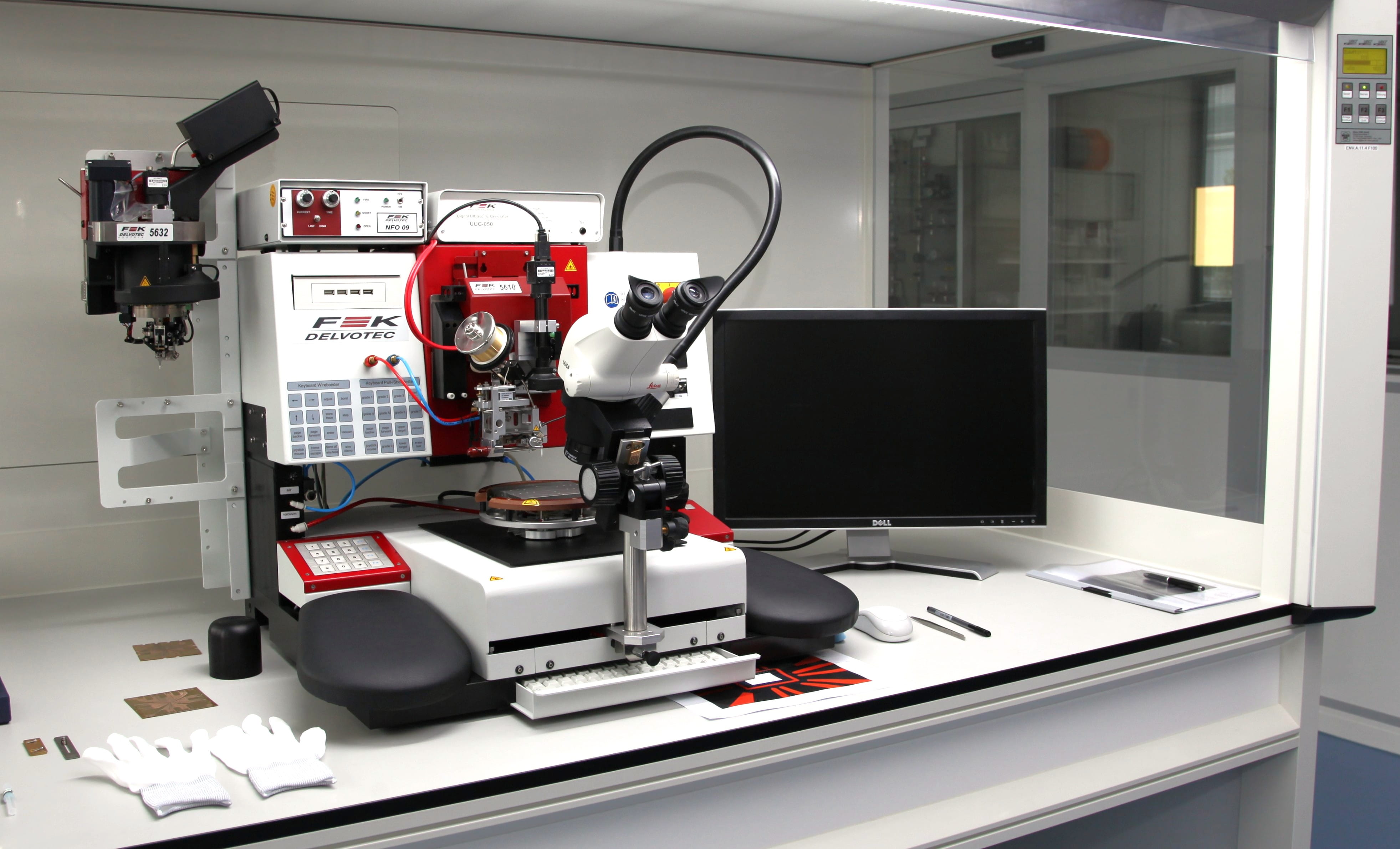
- Integration of chips into packages and onto printed circuit boards
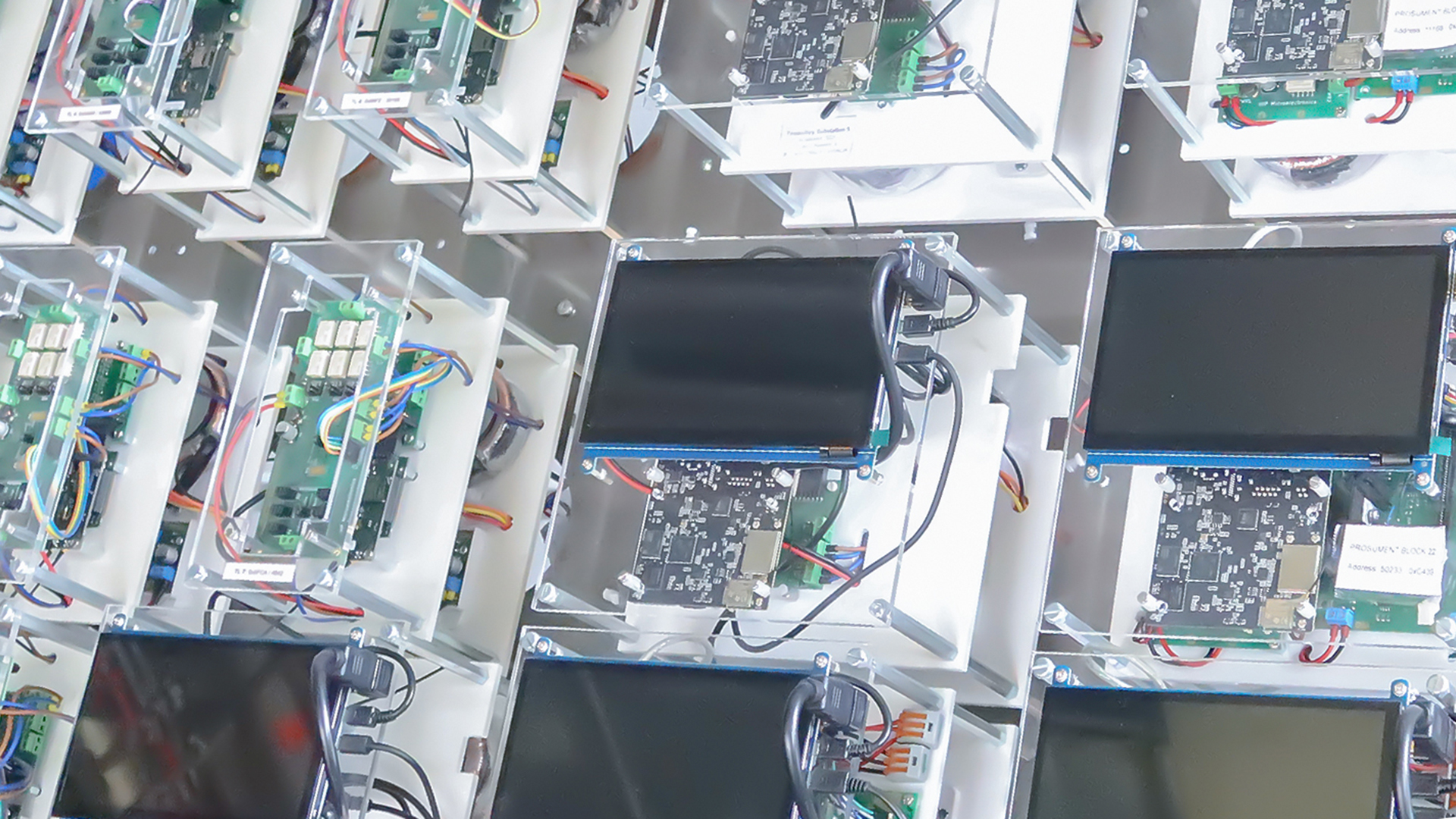
- Integration of demonstrators
Services
The System Integration and Test Services group supports internal and external customers with ASIC development, chip and wafer testing, system integration, and the implementation of demonstrators. The services include:
- ASIC design
- Testing of digital and Mixed-Signal systems-on-chip at chip and wafer level
- Measurement of antenna-based systems
- Printed circuit board design
- Chip assembly and integration into packages or onto printed circuit boards
- Integration of demonstrators